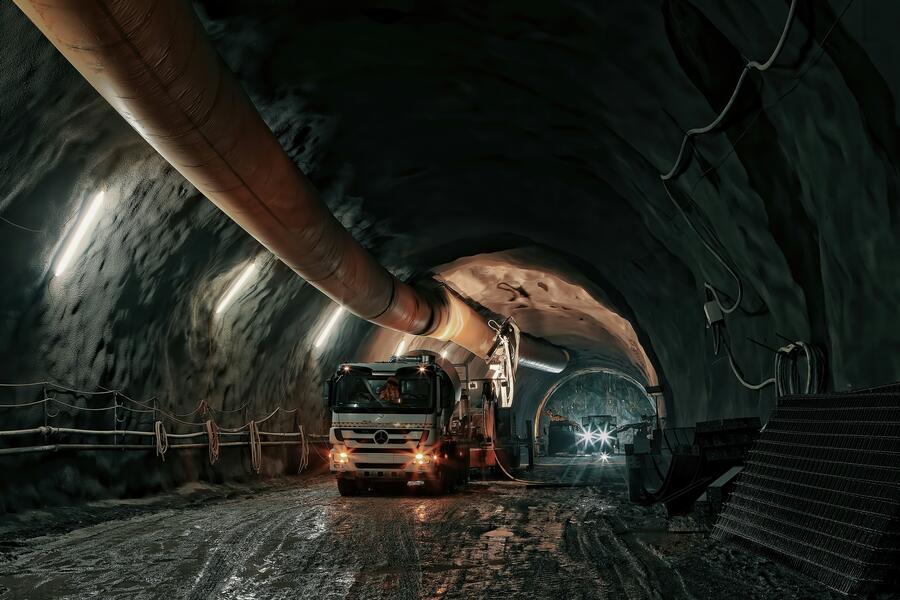
Thorough assessments for mineral and waste site acquisitions and investments — giving you the clarity and confidence to make informed decisions.
Why Minerals Due Diligence Matters
The acquisition of mineral-bearing land, mineral rights, or operational quarry assets is a specialist transaction requiring detailed expert assessment. Unlike conventional property acquisitions, mineral assets are characterised by complex planning histories, geological uncertainty, significant environmental liabilities, and regulatory constraints that are not always visible to non-specialist advisers.
Inadequate due diligence on a mineral acquisition can expose buyers to unquantified restoration liabilities, planning conditions that prevent anticipated operations, environmental remediation costs, or mineral rights disputes. Mineral Management provides rigorous, specialist due diligence to protect your interests.
Our Due Diligence Services
Planning consent review and conditions analysis
Mineral reserve assessment and resource appraisal
Environmental liability assessment
Restoration liability quantification
Lease structure review and royalty assessment
Regulatory compliance assessment
Environmental Permit review
Commercial and market assessment
Risk summary and recommendations
Report suitable for use by lenders and investors
Feasibility Studies
Before committing to the development of a new mineral site, a feasibility study assessing the technical, planning, commercial, and environmental viability of the proposal is essential.
Geological & Reserve Assessment
Appraisal of the quantity and quality of the mineral resource, extraction rates, and projected reserve life.
Planning Feasibility
Assessment of planning policy context, constraints, likely MPA response, and the realistic prospects of obtaining planning consent.
Environmental Appraisal
Identification of key environmental constraints and the likely scope and cost of mitigation and environmental management.
Commercial Assessment
Market assessment, revenue and cost projections, royalty benchmarking, and overall financial modelling.
Frequently Asked Questions
A comprehensive minerals due diligence report should cover: the nature, extent, and quality of the mineral resource; existing lease arrangements, royalty structures, and operator obligations; restoration liability assessment and adequacy of any restoration bond; environmental constraints, risks, and compliance status; title to the mineral interest and any encumbrances; market and commercial assessment of the resource; and an overall risk summary for the acquisition with recommended risk mitigations.
A restoration liability is the estimated cost of restoring a mineral site to the agreed after-use following completion of extraction. Understanding and quantifying the restoration liability is a critical element of mineral site due diligence — an underestimated liability can significantly affect the financial viability of an acquisition. The restoration liability should be assessed against any restoration bond or financial guarantee held, and any shortfall identified as a risk for the acquirer.
A standard mineral due diligence assessment typically takes 4–8 weeks, depending on the complexity of the site and the information available. More complex sites involving multiple interests, legacy restoration issues, or contested mineral rights may take longer. Initial high-level assessments can be provided within shorter timescales where required for initial transaction appraisal, with a fuller report to follow once the transaction progresses.
Common title issues encountered in mineral due diligence include: minerals severed from the surface in historical conveyances, making it necessary to investigate both the surface and mineral titles; access rights to the mineral (which may be separate from surface access); old mining leases that have never been formally surrendered; Crown minerals (gold, silver, coal, petroleum) that cannot be held by the surface owner; restrictive covenants affecting the use of the land; and ransom strips or third-party access rights that could affect the viability of extraction.
Mineral due diligence is required whenever a mineral interest is being acquired, whether as a standalone purchase or as part of a broader estate or property transaction. It is also recommended when a new mineral lease is being granted or renewed, when a mineral site is being used as security for borrowing, and when a company with significant mineral assets is being acquired. Even where a full due diligence is not warranted, a high-level review of the key risks is always advisable before committing to a mineral transaction.
Financial information relevant to mineral due diligence includes: production records (tonnes extracted by mineral type and period); royalty statements and payment history; deadrent payment history; details of any royalty deferrals or disputes; sales revenue data (to verify royalty calculations); restoration bond documentation and current bond level; and any outstanding financial obligations of the operator. Where the operator is a subsidiary of a larger group, the strength of any parent company guarantee should also be assessed.
Key environmental risks to assess include: ground and groundwater contamination (including any legacy contamination from historical operations); the adequacy of the environmental management plan and compliance with Environmental Permit conditions; the risk of statutory notices or enforcement action; proximity to environmentally designated sites (SSSIs, SACs, SPAs, Ramsar sites); the water environment impact of dewatering; air quality impacts from dust and vehicle movements; and ecological constraints that could affect the future development or restoration of the site.
Due diligence for an operating quarry focuses primarily on the existing lease, royalty history, operator compliance, remaining reserve life, and restoration position. For an undeveloped resource, the emphasis shifts toward geological assessment (reserve estimation and quality), market feasibility (demand, competition, and achievable royalty rates), regulatory and environmental constraints, and the time and cost involved in bringing the resource into production. Undeveloped resources carry higher uncertainty and typically require a more detailed feasibility assessment.
Mineral due diligence is typically instructed by acquirers of mineral land or royalty interests, lenders providing finance secured against mineral assets, investors in mineral royalty portfolios, landowners considering granting a new mineral lease, and solicitors advising on transactions involving land with mineral potential. Minerals due diligence may also be required by the Valuation Office Agency or HMRC in connection with tax assessments where the value of a mineral interest is in dispute.
Make an Enquiry
To discuss your minerals or waste requirements, please get in touch.