
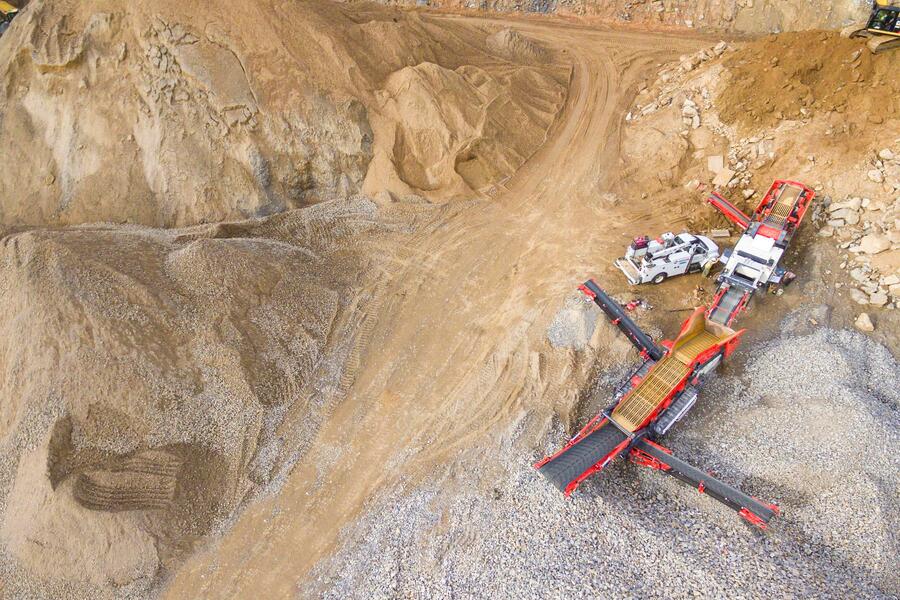
The environmental requirements for quarry planning applications have become significantly more demanding in recent years, driven by the introduction of mandatory Biodiversity Net Gain (BNG) requirements in England, heightened scrutiny of protected species impacts, and increasing expectations from Mineral Planning Authorities around the quality of restoration proposals. This article examines the key environmental considerations that quarry developers and mineral owners need to understand in the current planning environment.
Biodiversity Net Gain: The New Baseline
The Environment Act 2021 introduced a mandatory Biodiversity Net Gain (BNG) requirement for most planning permissions in England, requiring developments to deliver at least a 10% net gain in biodiversity compared to the pre-development baseline. For major development, this requirement came into force in February 2024.
Minerals planning applications are subject to BNG requirements, although the way in which BNG is calculated and delivered for mineral sites differs from conventional development in several important respects:
- The baseline is assessed using the Biodiversity Metric 4.0 (or its successor), which scores habitats on the basis of their ecological distinctiveness, condition, and strategic significance
- The "post-development" state for a quarry includes both the operational phase (when much of the site will be disturbed) and the restored state — and the assessment must consider both
- Quarry restoration can create significant biodiversity gain opportunities — particularly on limestone and chalk sites, where calcareous grassland restoration can deliver very high biodiversity value
- Off-site BNG through biodiversity units or BNG credits may be used where on-site delivery is not sufficient or feasible
The BNG requirement is creating both challenges and opportunities for quarry developers. The challenge is demonstrating that the pre-development baseline has been accurately assessed and that the post-restoration habitat will genuinely deliver the required net gain. The opportunity is that well-designed restoration schemes — incorporating calcareous grassland, wetland, scrub, and woodland habitats — can deliver very substantial net gains, which can be used to demonstrate the environmental benefits of the quarrying proposal.
Ecological Surveys and Protected Species
Quarry planning applications almost always require a comprehensive programme of ecological surveys. The types of surveys required will depend on the specific habitats and species present on or near the site, but commonly include:
- Bat surveys — including transect surveys, static detector deployment, and emergence/re-entry surveys. Bat surveys can only be conducted between April and October (or in some cases up to November), and a full suite of surveys typically requires surveys across at least two seasons
- Great crested newt surveys — including pond surveys (torch survey, bottle trap, egg search, eDNA survey) and terrestrial habitat assessment. eDNA surveys can only be conducted between mid-April and the end of June
- Breeding bird surveys — dawn chorus surveys and territory mapping, conducted between April and July
- Reptile surveys — using artificial refugia placed in suitable habitat, conducted between March and September (peak surveys April–June and August–September)
- Dormouse surveys — using nest tubes or nest boxes in suitable scrub or woodland habitat
- Phase 1 and Phase 2 Habitat Survey — assessment of all habitats on and adjacent to the site
The seasonally constrained nature of many ecological surveys means that the pre-application survey programme for a quarry planning application must be carefully planned, often requiring two or more survey seasons. This can add 12–24 months to the pre-application preparation period.
Hydrogeological Considerations
Many mineral deposits — particularly limestone, chalk, and sand and gravel — are associated with significant groundwater resources. The hydrogeological impacts of quarrying can include:
- Dewatering of the quarry void, reducing groundwater levels in the surrounding area
- Contamination of groundwater by fuel or chemical spillages
- Interception of groundwater that previously discharged to surface watercourses or wetland habitats
- Creation of a permanent waterbody in the restored quarry that may affect local groundwater levels
A comprehensive hydrogeological assessment is required for any quarry that will intersect the water table or that is located in a groundwater source protection zone. The assessment must demonstrate that the proposed operations can be carried out without unacceptable impacts on groundwater quality or quantity, and that any residual impacts can be adequately mitigated and monitored.
Landscape and Visual Impact
Quarries inevitably create significant landscape and visual impacts during their operational life. The assessment of landscape and visual impact (LVIA) is a standard component of the EIA for a quarry planning application, and it must demonstrate that the impacts can be acceptably managed through careful site design, screening, progressive restoration, and ultimately the achievement of a restored landform that integrates well with the surrounding landscape.
Particular sensitivity applies where the quarry site is located within or adjacent to a National Landscape (formerly AONB), National Park, or other designated landscape area. In these locations, the assessment of landscape impact is subject to the highest level of scrutiny, and the restoration scheme must demonstrate that the restored landscape will make a positive contribution to the special qualities of the designation.
Noise and Dust
Operational quarries generate noise from extraction equipment, crushing and screening plant, and vehicle movements, and dust from these activities and from the handling and processing of dry mineral. Noise and dust assessments are standard components of quarry EIAs, and planning conditions will typically set limits on noise levels at nearby sensitive receptors and require dust suppression measures and monitoring.
The Opportunity in Environmental Challenge
It is tempting to view the increasingly demanding environmental requirements of quarry planning as obstacles to development. In reality, the evolution of environmental requirements — particularly around biodiversity net gain and ecological restoration — creates genuine opportunities for quarry developers and mineral owners who engage with them positively.
A quarry restoration scheme that creates high-quality calcareous grassland, wetland, and woodland habitats can deliver biodiversity net gain that genuinely enhances the ecological value of the landscape — and in so doing, creates a restoration legacy that the local community and future generations can value and enjoy. This positive environmental story is increasingly important in securing planning consent for quarrying proposals, and applicants who invest in high-quality restoration design and biodiversity enhancement are demonstrably more successful in the planning system than those who treat restoration as an afterthought.
Mineral Management advises clients on environmental strategy for quarry planning applications, helping to develop restoration schemes and biodiversity enhancement proposals that genuinely deliver for nature while supporting a compelling planning case.