
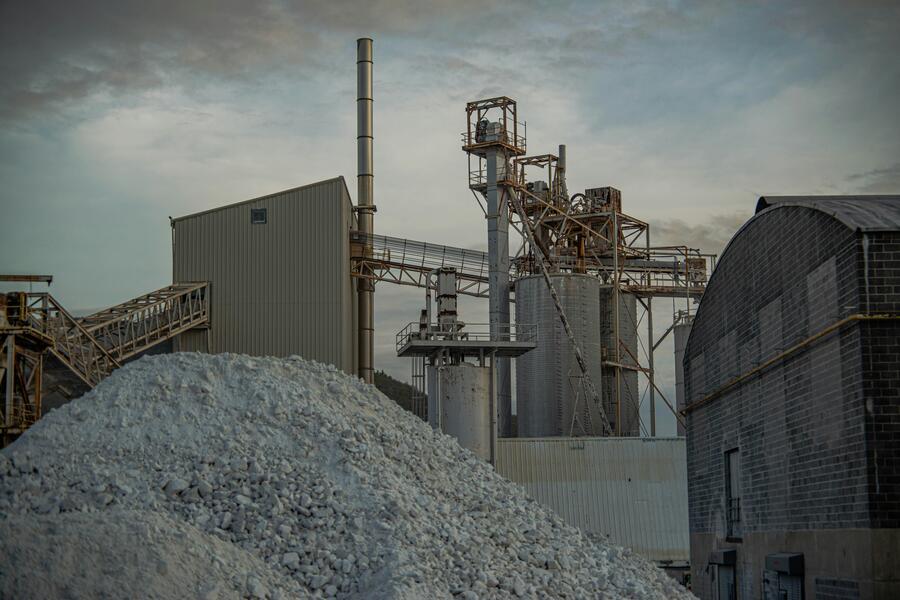
Mineral valuation is a specialist discipline that sits at the intersection of property valuation, geology, mining engineering, and planning law. Unlike the valuation of conventional property assets — where comparable sales evidence is readily available and the valuation process is relatively straightforward — the valuation of mineral interests requires deep specialist expertise and a detailed understanding of the specific characteristics of the mineral resource and the market in which it operates.
A mineral deposit is a wasting asset: a finite, non-renewable resource that diminishes in value as extraction proceeds and which, once exhausted, cannot be renewed at the same physical location. This wasting character means that the remaining economic life of the resource, the annual income it generates, and the liabilities it will eventually create — particularly restoration costs — are all central to any mineral valuation. The value of a mineral interest is not fixed; it changes as the reserve is worked, as market conditions shift, and as consents and lease terms evolve.
This guide explains the key mineral valuation methods used in UK practice, the circumstances in which a mineral valuation is required, and what to expect from the valuation process.
When Do You Need a Mineral Valuation?
Mineral valuations are required in a wide range of circumstances. The most common are:
- Acquisition and disposal of mineral interests — establishing the market value of mineral-bearing land or mineral rights before a purchase or sale
- Inheritance tax — HMRC requires a market value valuation of all assets in an estate at the date of death for IHT purposes, and mineral interests can form a very significant part of the value of a rural estate
- Capital gains tax — establishing the market value of mineral interests at the date of acquisition or disposal for CGT calculations
- Compulsory purchase — where mineral interests are compulsorily acquired (for example, for infrastructure schemes), the landowner is entitled to compensation based on market value
- Lease royalty review — establishing an appropriate market royalty rate for a mineral lease review by reference to comparable market evidence
- Dispute resolution — providing independent expert valuation evidence in landlord and tenant disputes, partnership disputes, or litigation involving mineral assets
- Due diligence — pre-acquisition valuation as part of a due diligence exercise for an investor or lender
Key Mineral Valuation Methods
1. Discounted Cash Flow Analysis
Discounted Cash Flow (DCF) analysis is the most sophisticated and rigorous approach to mineral valuation, and is the preferred method for valuing active or developable mineral deposits where sufficient data is available. The DCF approach involves:
- Estimating the total recoverable mineral reserve (in tonnes)
- Projecting the annual extraction rate over the life of the reserve
- Estimating the selling price per tonne of the extracted mineral over the projection period
- Deducting the costs of extraction, processing, transportation, and restoration
- Applying an appropriate discount rate to convert future cash flows to a present value
The discount rate applied in a mineral DCF reflects the risk and uncertainty inherent in the investment — the geological risk of the reserve estimate, the planning risk, the market risk, and the operational risk of the quarrying operation. The valuer must also determine whether the discount rate should be applied on a pre-tax or post-tax basis, which depends on the nature of the cash flows being projected. Selecting an appropriate discount rate is one of the most technically demanding aspects of a mineral DCF valuation, and must be justified by reference to the specific characteristics of the asset.
Unlike the valuation of conventional investment property — where an income stream can, in principle, continue indefinitely — the DCF of a mineral asset must explicitly account for the finite life of the income stream. The valuation must remain reliable at whatever stage of depletion the asset is in at the valuation date, and must separately identify any residual land value attributable to the site once the mineral reserve is exhausted.
2. Comparable Transaction Evidence
Where there is sufficient market evidence from comparable transactions in similar mineral assets, a valuation can be derived by reference to comparable sales. This approach is common for simpler mineral interests — for example, the royalty income from a long-established quarry with a known reserve — where the valuation can be derived by capitalising the royalty income at an appropriate yield derived from comparable transactions.
An important characteristic of mineral wasting assets is that they seldom transact directly in the open market. When mineral interests are sold, they are typically embedded in a larger corporate acquisition of a quarrying business or in the sale of a landed estate, with the terms of the transaction remaining commercially confidential. As a result, truly comparable, arm's-length mineral transactions are rare — and where they can be identified and verified, the specific terms must be carefully analysed and adjusted to reflect differences in mineral type, reserve life, location, lease conditions, and restoration liability.
3. Royalty Yield Capitalisation
Where a mineral lease is in place and generates a known royalty income, the value of the mineral interest can be estimated by capitalising the annual royalty income at an appropriate yield — similar in principle to the approach used to value let investment property. The yield applied reflects the security of the income, the strength of the operator, the minimum payment provisions, the remaining reserve life, and the restoration liability that will eventually fall on the mineral owner at the end of the lease.
Where comparable transaction evidence for the capitalisation rate is unavailable or unsuitable, the rate is instead derived from an equated yield — replicating the return that an investor or landlord would expect from the initial investment. Factors incorporated into this equated yield assessment include the cost of borrowing, the geological and physical characteristics of the natural resource, the nature of the working rights, the methods of operation, and the risks of achieving the projected royalty income or operational margins.
4. Residual Value / Prospect Value
Where a mineral resource has been identified but is not yet under a mineral lease or in active extraction, the value attributable to the mineral potential is assessed using a prospect value approach. This involves estimating the probability-adjusted value of the potential future royalty income, discounted to reflect the time and risk involved in bringing the resource to production.
Isolated Asset vs. Operational Going Concern
A critical decision in any mineral valuation is whether the mineral resource is being valued as an asset in isolation, or as part of an operational going concern. This distinction has a significant effect on both the information required and the methodology applied.
When valuing a mineral interest as an isolated asset — for example, a landowner's royalty entitlement under a long-term mineral lease — the valuer focuses primarily on the income stream the asset generates, the terms of the lease governing it, and the restoration liability that will fall on the mineral owner at the end of operations. The financial performance of the operator is relevant to the extent it affects the security of the royalty income, but the valuation is not a valuation of the operator's business.
When the same site is valued as an operational going concern — typically for a sale of the quarrying business, a merger, or financial reporting — the valuer must also assess the full financial performance of the extraction operation: ex-pit selling prices for each product, production costs, plant depreciation, operational margins, and all associated liabilities including environmental obligations and restoration costs. The scope of the valuation must be clearly agreed at the outset of the instruction.
What Makes Mineral Valuation Complex?
Several factors make mineral valuation significantly more complex than conventional property valuation:
- Reserve uncertainty — mineral reserve estimates are based on sampling and interpolation, and carry inherent uncertainty
- Market volatility — mineral commodity prices fluctuate with construction activity, international trade, and raw material markets
- Planning risk — the extent of the consented extraction area and the conditions attached to planning permissions significantly affect value
- Restoration liability — the cost of restoring the site at the end of quarrying is a significant deduction from value
- Lease terms — the specific terms of the mineral lease, including royalty rate, minimum payments, review mechanisms, and restoration obligations, are critical to value
- Environmental constraints — the presence of protected species, designated habitats, or hydrogeological constraints can limit the extent of extractable reserves
HMRC and Mineral Valuations
HMRC's Valuation Office Agency (VOA) has significant expertise in scrutinising mineral valuations for taxation purposes, particularly inheritance tax. Mineral valuations for tax purposes need to be carefully prepared by a specialist to withstand VOA scrutiny. Poorly prepared valuations — whether too high or too low — can result in overpayment of tax or HMRC challenge and penalties.
It is also important to consider the availability of Business Property Relief (BPR) for operational mineral businesses, which can significantly reduce the IHT liability on a qualifying mineral interest. The availability and extent of BPR in mineral contexts is a complex area and specialist advice is essential.
Assumptions and Special Assumptions
Because mineral valuations deal with the future extraction of a finite and partially unknown resource, they necessarily involve explicit assumptions that must be stated clearly in the valuation report. Failure to identify and communicate these assumptions creates ambiguity and risk — both for the valuer and the client.
Common assumptions in mineral valuations include:
- An assumption that the geological and production data provided by the client or its technical advisers is accurate and complete
- An assumption as to future annual saleable production yields after processing — derived from the geological reserve estimate and the processing characteristics of the mineral
- A special assumption, where applicable, that all planning permissions and environmental permits are in place at the valuation date — or alternatively, that they are not yet in place, to value the interest without those consents
- A special assumption as to whether a particular anticipated event — such as a new planning consent, a royalty review outcome, or an operational change — has or has not occurred at the valuation date
The specific assumptions applicable to each instruction must be agreed with the client before the valuation is finalised. These assumptions, together with the basis of valuation and the sources of information relied upon, form an essential part of any credible mineral valuation report.
It is also important to note that in some cases a mineral interest may carry a negative value — particularly where restoration liabilities or environmental obligations are significant relative to the remaining commercial value of the reserve. Any competent mineral valuation must assess this possibility openly and address it in the report.
Seeking a Mineral Valuation
If you require a mineral valuation, the first step is to instruct a specialist with demonstrable expertise in UK mineral markets and valuation methodology. Expert, independent consultancy advice is available for all project types.